There’s something special about seeing a log home come back to life.
The color is rich again. The grain stands out. The entire structure feels protected, solid, and cared for. But that transformation doesn’t happen from a quick coat of stain. It comes from a proven process, built on years of experience and attention to detail.
At Log Masters Restorations, we’ve spent more than two decades refining our approach to log home staining across Missouri, Arkansas, Colorado, Illinois, Nebraska, Texas, and Oklahoma. What we’ve learned is simple: the outcome is only as good as the preparation behind it.
Here’s exactly what happens when our team shows up to stain your home—and why every step matters.
Before We Arrive: What to Expect
Before we show up, you should receive a welcome email from your designated Project Manager. It will include a Pre-Service Preparation Checklist and a few other important instructions for your upcoming project. It’s also a great time for you to reply with any questions you have, so we can address them before we arrive.
What to Expect When Log Masters Shows Up
A professional log home staining project is not a quick in-and-out job. Depending on your home’s size and condition, the process can take several days and involve multiple phases before the stain is even applied.
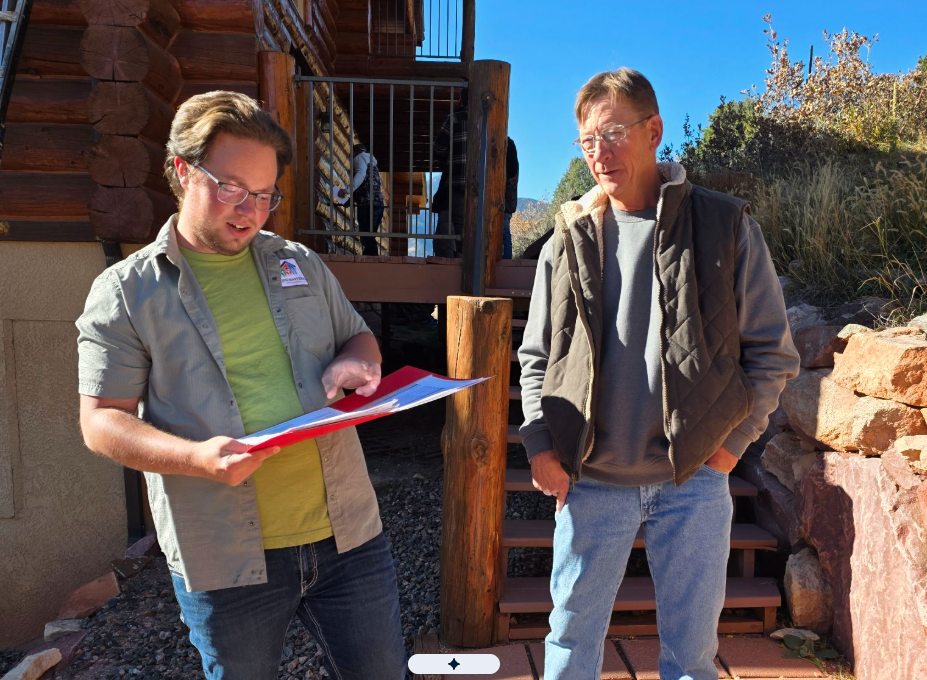
It starts with a conversation.
We walk your property with you, look closely at the condition of your logs, and talk through what we’re seeing. You’ll know what needs to be done, what can wait, and what’s most important to protect your home in the long term.
We’ve seen situations where a home looks “fine” from a distance, but closer inspection reveals failing stain, mildew buildup, or early signs of moisture intrusion. In one recent project, a home had a failing finish that was allowing water into the wood. After a full prep process and proper stain application, that home is still holding strong years later.
That’s the difference between simply applying the stain and doing the job right.
Why Does Staining Matter? The Consequences of Stain Neglect
Your log home is constantly exposed to the elements.
Sunlight breaks down wood fibers. Rain introduces moisture. Temperature swings cause expansion and contraction. Over time, all of this adds up.
Without proper log home staining, that protection barrier disappears. Once that happens, moisture gets into the wood, leading to mold, rot, and eventually structural damage.
And here’s the reality most homeowners don’t hear early enough: maintenance is always more affordable than repair.
A routine staining project protects your investment. Ignoring it can lead to costly repairs that go far beyond the surface.
Staining isn’t just cosmetic; it’s one of the most important ways to protect the structure of your home.
How Often Should You Restain a Log Home?
There’s no one-size-fits-all answer, but there are reliable guidelines.
Most homes benefit from log home staining every 3 to 7 years, depending on a few different factors:
- Sun exposure, especially on south and west-facing walls
- Elevation and UV intensity
- Local weather patterns
- Type of stain previously applied
- Quality of the original preparation and application
Signs Your Log Home Needs a New Stain
Your home will usually give you clear signs when it needs attention.
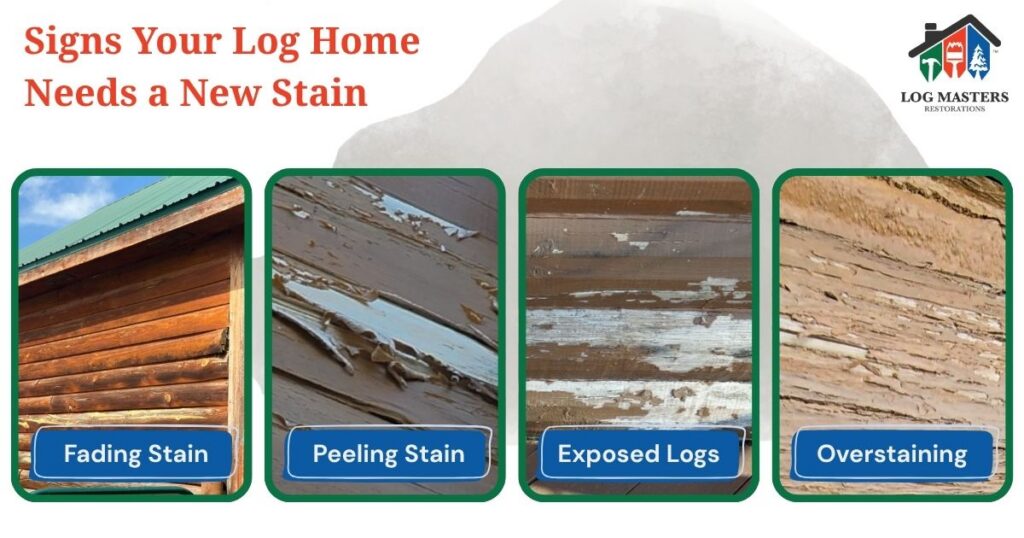
Fading color is often the first indicator. From there, you may notice peeling, cracking, or chalking on the surface. Dark patches after rain are another red flag, signaling that moisture is being absorbed instead of repelled.
If your logs have turned gray or silvery, that’s UV damage already at work.
A simple test can tell you a lot. Sprinkle water on your logs. If it beads up, your stain is still doing its job. If it absorbs quickly, it’s time to start thinking about restaining.
Catching these signs early allows for maintenance-level work. Waiting too long often leads to more intensive restoration.
First Things First: Site Setup and Surface Assessment
Protecting Landscaping, Windows, and Surrounding Structures
Before we ever touch your logs, we take the time to protect everything around them.
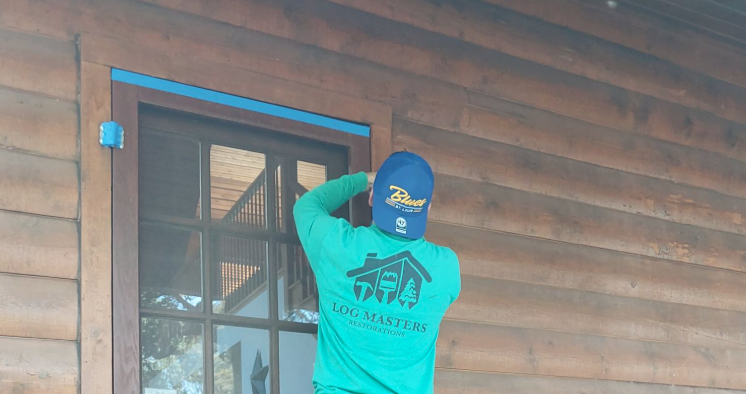
We carefully cover landscaping, decks, windows, doors, fixtures, and nearby structures. Overspray from staining or debris from prep work can easily damage surfaces if they’re not properly shielded.
This step may not be the most exciting part of the process, but it’s one of the clearest indicators of a professional crew. When the job is done, your home should look better… not like it just went through a construction zone.
Reading the Wood: What We Check Before Touching the Surface
Every log home tells a story, and before we begin any log home staining project, we take the time to read it.
We look for moisture levels, soft spots, UV damage, failing finishes, and signs of insect activity. We also evaluate how well the current stain is holding and whether it’s bonding properly to the wood.
In some cases, we may discover other types of damage, such as squirrel damage. We will discuss any needed repairs with you before we stain.
This assessment shapes the entire plan. Two homes may look similar from the road, but require completely different prep strategies. That’s why we never jump straight into staining—we make decisions based on what your wood actually needs.
Time to Prep: What We Do Before Staining
Removing Old Stain with Media Blasting or Stripping
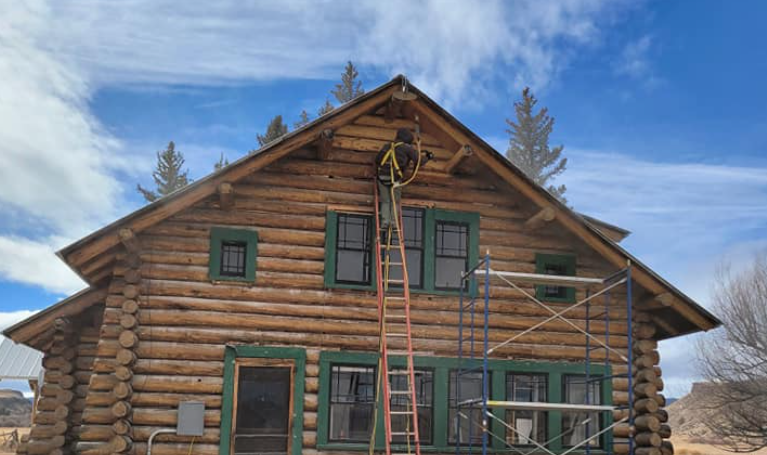
If the existing stain is failing, it has to come off. Applying a new stain over a compromised surface is one of the fastest ways to waste time and money.
Media blasting is often our go-to method because it removes old stains while preserving the wood’s integrity. In some cases, chemical stripping may be the better option, especially for certain coatings or delicate areas.
The goal is simple: get back to a clean, sound surface so the new stain can bond properly and provide protection.
Smoothing Rough Grain with Sanding/Grinding
Over time, exposure to sun and weather can raise the grain of the wood, leaving it rough and uneven.
Sometimes, stubborn stains stick even after media blasting, which will require sanding or grinding. This creates a more uniform surface. This not only improves the final appearance but also helps the stain absorb more evenly.
It’s a step that many skip, but when a home needs it, this makes a noticeable difference in both the look and longevity of your log home staining project.
Removing Dust and Debris with a Cleanup & Blow Down
After blasting or sanding, dust settles into every crack, crevice, and joint.
We use high-powered air blowers to completely remove that debris. If dust is left behind, it can interfere with stain adhesion and lead to uneven coverage.
Think of this step as resetting the surface—clean, clear, and ready for the next phase.
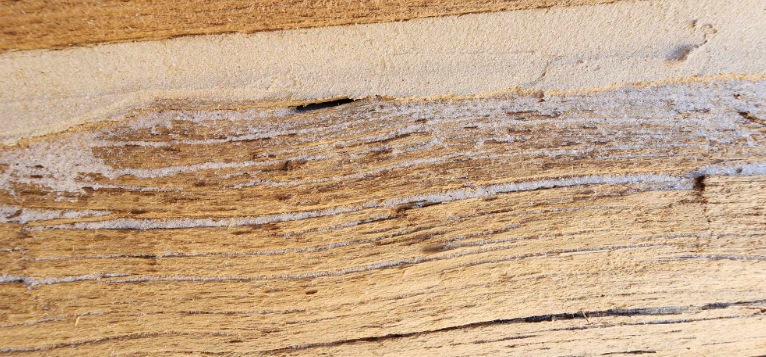
Checking for Mildew and Cleaning the Surface with a Log Wash
Mildew, algae, and organic growth are common on log homes, especially in shaded or moisture-prone areas.
If we see any signs of growth, we apply a specialized log wash to thoroughly clean the surface. A log wash is a concentrated, environmentally friendly cleaner that, if needed, removes dirt, pollen, and mold without damaging anything and prepares wood for new coats of stain.
We don’t want to keep any contaminants around that would otherwise get sealed under the new stain.
Preventing Mold, Rot, and Bugs with a Borate Application
Once the wood is clean and exposed, we apply a borate treatment.
Borate penetrates the wood and provides long-term protection against mold, decay fungi, and wood-boring insects like termites and carpenter ants.
This is one of the most valuable protective steps in the entire process. It works beneath the surface, helping safeguard your home long after the staining is complete.
Controlling PH and Wood Tone with Brightener
After cleaning, the wood’s pH can become imbalanced, and the color may appear dull or uneven.
If the home needs it, a brightener helps restore the wood’s natural tone while bringing the pH closer to the level needed for proper stain adhesion.
It’s also what brings that fresh, natural wood look back before stain is applied—setting the stage for a more vibrant final result.
Restoring PH with a Neutralizing Wash
If alkaline cleaners were used during prep, a neutralizing wash is critical.
Without it, the surface may remain out of balance, leading to adhesion issues or premature stain failure.
This step ensures the wood is in ideal condition to accept stain and perform as intended.
Improving Wood Grain Visibility with Prelude/Wood Primer
For older or heavily weathered homes, we may apply a wood primer or a Prelude product.
This helps even out absorption across the surface, enhances grain definition, and improves the overall consistency of the stain application.
It’s especially useful when dealing with mixed conditions across a home, where some areas may absorb stain differently than others.
Doing Our Final Surface Check and Masking
Before the stain ever touches the wood, we do one last full inspection.
We check for missed areas, confirm the surface is clean and balanced, and make any final adjustments. Then we carefully mask off windows, trim, stonework, and foundations to ensure clean lines and a polished finish.
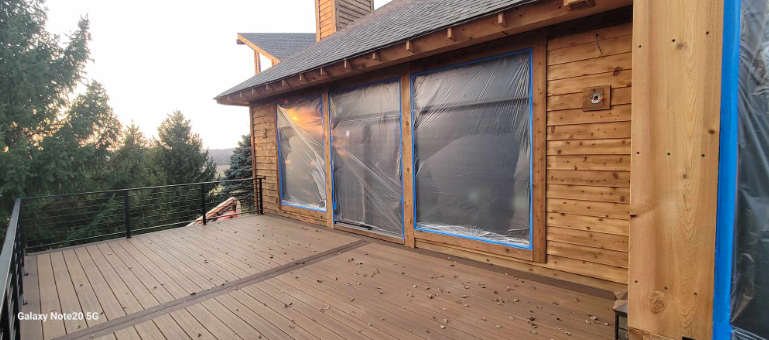
At this point, everything is ready—and only then do we move into the staining phase.
Applying the Log Home Stain and Sealer
How We Select the Right Exterior Stain for Your Log Home
Not all stains are created equal, and choosing the right one is critical.
We consider your home’s exposure to sun, moisture, and weather, as well as the condition of the wood itself. Some homes benefit from deep-penetrating oil-based stains, while others perform better with water-based systems that offer advanced UV protection.
Our goal is to select a system that will protect your home in the long term—not just look good on day one.
Stain Sampling: Choosing Your Stain Color
Color selection is more complex than picking from a brochure.
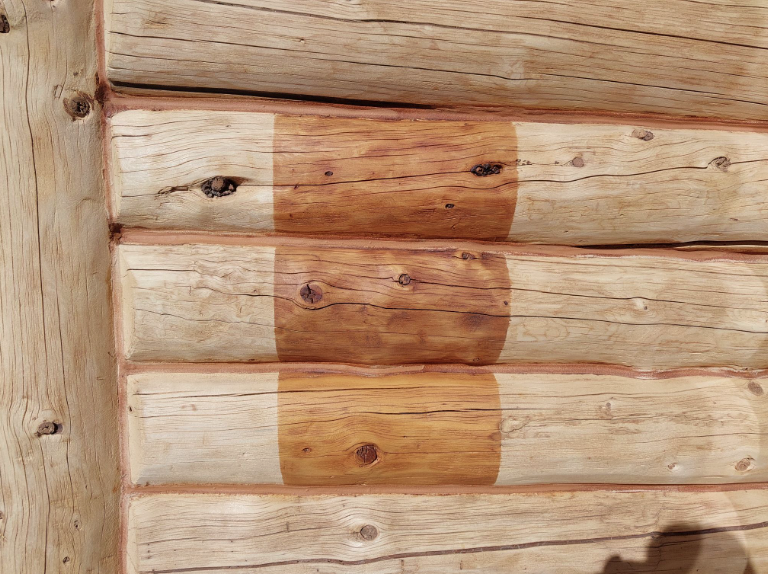
We apply sample stains directly to your logs so you can see how the color looks in real lighting and against your home’s natural wood tone.
This step eliminates guesswork and ensures you feel confident before committing to the full application.
Application Method: Brush, Spray, or Back-Rolled — and Why It Matters
We don’t rely on just one method—we use the combination that delivers the best results.
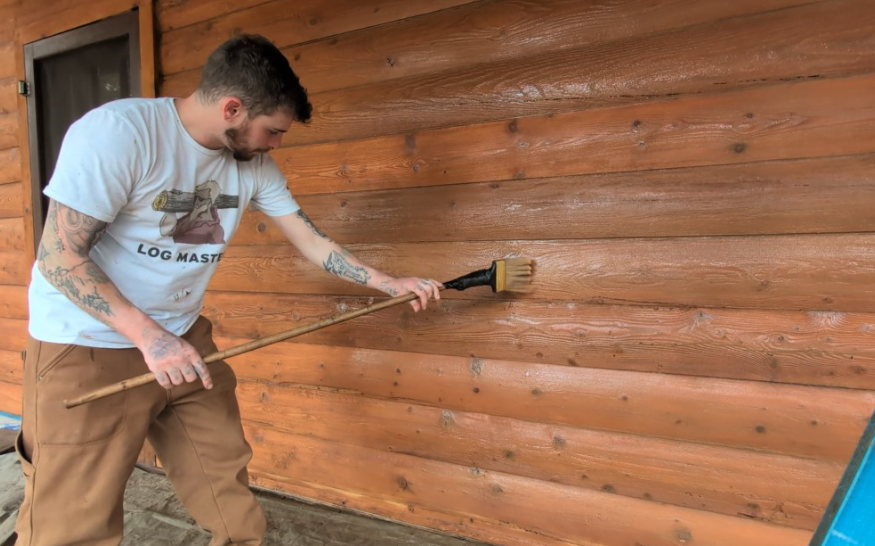
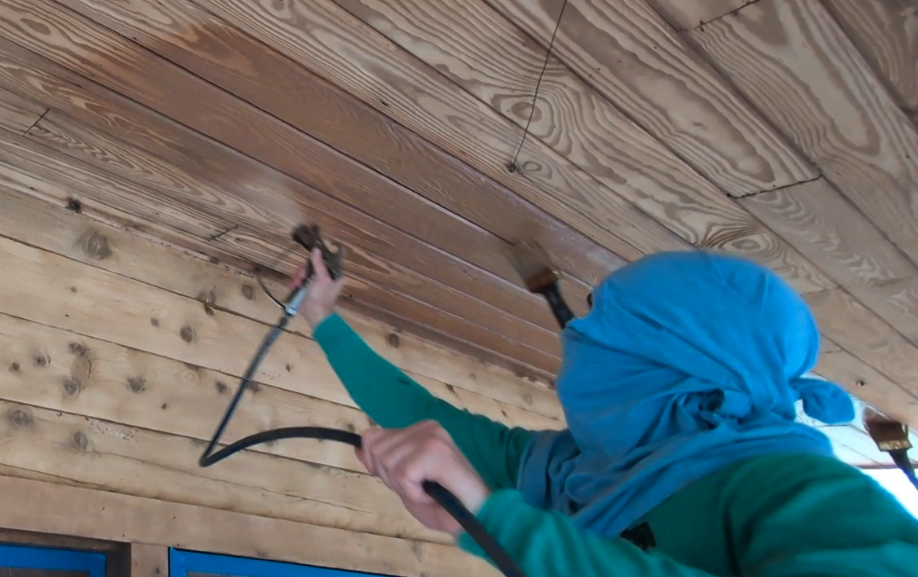
Spraying allows for efficient, even coverage, while brushing or back-rolling works the stain into the wood for deeper penetration.
This approach ensures your log home staining project doesn’t just sit on the surface but truly protects the wood beneath.
Coverage, Coat Count, and Working in Sections
Proper coverage is everything.
We follow manufacturer guidelines closely for how much stain to apply and how long to wait between coats. Most homes require multiple coats to achieve full protection.
We also work within controlled sections to maintain consistency throughout the structure. This avoids lap marks, uneven tones, and other common issues that show up when staining isn’t done methodically.
Our teamwork approach is also highly beneficial. One technician sprays the stain on, while another immediately brushes it in (before it dries). This allows the team to work along log-linear paths to avoid lap marks.
End Grain, Checks, and Crevices: The Details Most Applicators Miss
The most vulnerable parts of your log home are also the easiest to overlook.
End grain, cracks (checks), and tight crevices absorb moisture faster than flat surfaces. If these areas aren’t properly sealed, they become entry points for water and decay.
We take extra time to hand-apply stain in these areas, ensuring they are fully saturated and protected.
Optional: Fire Retardant and Resistant Coatings for Log Homes
In certain regions, especially fire-prone areas, additional protection may be recommended.
Fire retardant or fire-resistant coatings can be applied as part of the staining process, adding another layer of defense without compromising the look of your home.
If this is something you’re considering, we’ll walk you through the options and help determine what makes sense for your location. We also encourage you to check the factory warranties and compatibilities between these coatings and the stain to ensure both will work together.
What Happens After Staining? A Brief Overview
For some homes, staining a log home is part of a simple maintenance plan. For others, it’s one of the last steps of a larger restoration plan.
Depending on your home, we may do two things after we finish staining:
- Chinking and Chink Painting: Seals gaps between logs to keep out air and moisture while improving energy efficiency.
- Detail Work: Light sanding or touch-ups to create a clean, consistent finish
The Final Walkthrough and Ongoing Care
Once the final coat is complete, we don’t just pack up and leave.
We perform a detailed inspection, checking for consistency, coverage, and any areas that need additional attention. Then we walk through the project with you to make sure everything meets your expectations.
After your log home staining project is complete, ongoing maintenance becomes much simpler.
We will provide you with a magnet to note the stain we used, along with the next expected maintenance, so you can place it in a spot to remind you (many choose their refrigerator or the main electrical box of the cabin). We will also reach out to you with reminders when the time comes for routine maintenance. We are the company you hire for the life of your cabin; we’ll be there for you year after year.
Our goal isn’t just to make your home look great today. It’s to keep it protected for years to come.
Ready to Schedule Your Log Home Staining Job?
If your home is starting to look faded, weathered, or simply hasn’t been stained in a few years, it’s time to take a closer look.
A professional log home staining project does more than improve appearance. It protects your home from the elements, extends its lifespan, and helps you avoid costly repairs down the line.
At Log Masters Restorations, we take pride in doing the job the right way—from preparation to final walkthrough. You’ll always know what’s happening, why it matters, and what to expect next.
Reach out today for a free estimate, and let’s talk about what your log home needs to stay strong, beautiful, and protected for years to come.
The post The Log Masters Staining Process: What Actually Happens on Job Day appeared first on Log Home Restoration, Maintenance & Additions | Log Masters.
source https://logmastersrestorations.com/staining/log-masters-log-home-staining-process/
source https://logmastersrestorations.blogspot.com/2026/06/the-log-masters-staining-process-what.html

No comments:
Post a Comment